In the high-stakes fields of forensic ballistics, questioned document examination, and industrial quality control, the margin for error is nonexistent. Investigators and technicians often face the grueling “pain point” of manual evidence alignment, where even a micron-level discrepancy in magnification or positioning can lead to a failed comparison and compromised results. For many labs, the lack of automation and precision in traditional optical systems results in eye fatigue, inconsistent data, and a slow workflow that hinders critical decision-making.
OPTO-EDU understands these challenges. With over 25 years of professional experience, we have developed a comprehensive range of more than 1,500 microscope models to provide the ultimate precision for every research and industrial requirement. Our commitment to technical excellence is reflected in our advanced comparison systems, designed to bridge the gap between traditional optics and modern lab efficiency.

The Core Principle: Merging Dual Optical Paths
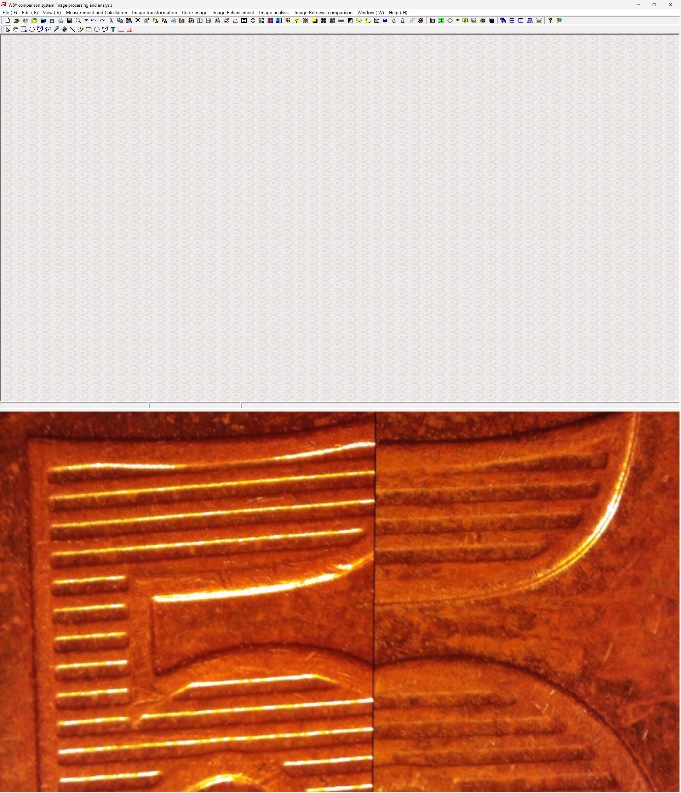
The fundamental working principle of a comparison microscope involves two identical optical paths connected by an optical bridge. This allows two different objects—such as a “known” bullet and a “questioned” bullet—to be viewed simultaneously in a single field of view.
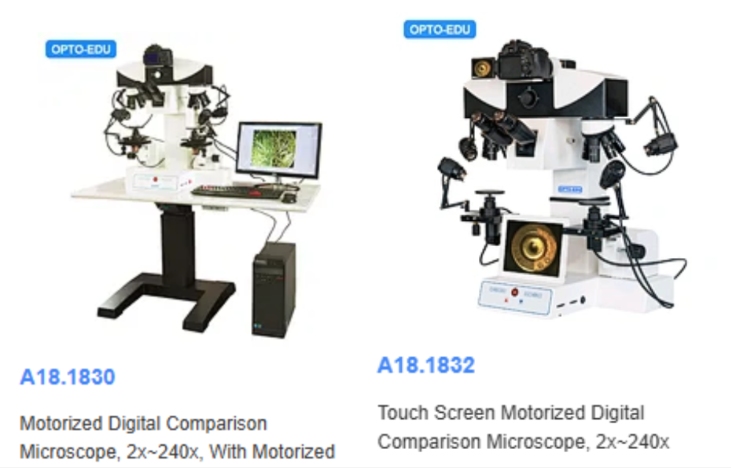
Modern labs are increasingly moving toward a digital microscope comparison workflow to enhance data sharing and accuracy. By utilizing an optical bridge with a digital camera port and SLR digital camera port, systems like the OPTO-EDU A18.1830 can project images onto a high-definition monitor, allowing multiple investigators to analyze evidence in real-time. This digital integration eliminates the physical limitations of the binocular head and provides a platform for professional forensic analysis software to perform measurements and image comparison.
Essential Optical and Structural Components
To achieve the level of precision required for forensic science, several key components must work in perfect harmony.
The Optical Bridge and Image Modes
The bridge is the heart of the system, responsible for merging the two images. High-end models like our A18.1832 offer versatile viewing modes, including full-field left, full-field right, split-image, and overlapping views. The motorized separation line allows users to move the boundary between the two images with sub-micron precision, making it easier to match fine striations on bullet fragments.
LWD Infinity Plan Objectives
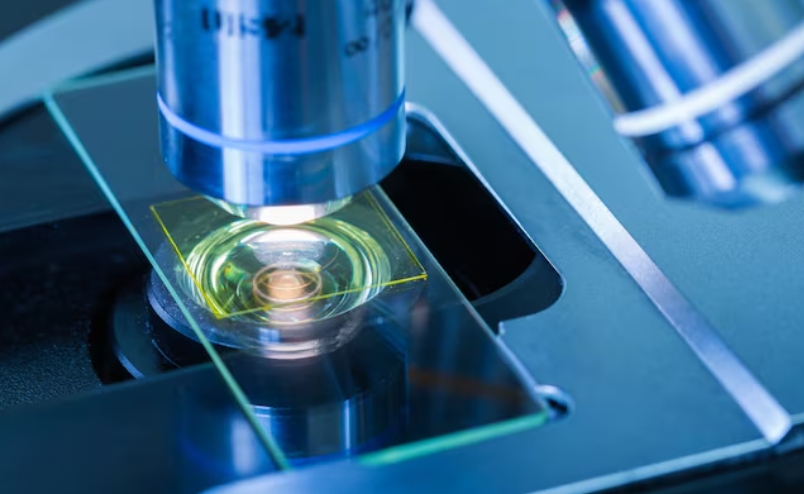
Objective quality determines the clarity of the evidence. Our systems utilize Long Working Distance (LWD) infinity plan objectives, ranging from 0.5x to 6x, often mounted on a motorized sex-tuple nosepiece. These lenses ensure that the image remains flat and clear from center to edge, which is vital for a digital microscope comparison where every pixel counts.
Magnification Correction System
A common struggle in forensics is the slight variance in magnification between two separate optical paths. To solve this, OPTO-EDU includes a dedicated magnification correction system with a correcting lens. By placing two identical scales on the stages and adjusting the correction knob, users can ensure that both sides of the microscope are perfectly matched, guaranteeing that any observed differences are in the evidence itself, not the equipment.
Enhancing Efficiency with the Motorized Microscope
In the modern era, a motorized microscope for lab automation is no longer a luxury—it is a necessity for high-volume laboratories.
Motorized Working Stages and Column
Traditional manual stages can be cumbersome and prone to vibration. The OPTO-EDU Motorized Microscope series, specifically the A18.1830 and A18.1832, features motorized XYZ/R working stages. This allows for precise 3D movement and rotation controlled via a joystick or software, ensuring that the investigator can find the perfect angle for light reflection on a cartridge case without manual interference. Furthermore, the 150mm motorized column adjustment provides a large vertical range for various evidence sizes.
Automated Lab Integration
Integrating a motorized microscope for lab automation significantly reduces the time spent on repetitive tasks. With the Win11 touch screen tablet integrated into the A18.1832, the control system manages the nosepiece, stages, and separation line movement simultaneously, allowing for a seamless transition from low-power scanning to high-power detailed comparison.
Diverse Application Scenarios and Solutions
The versatility of the comparison microscope extends far beyond simple ballistics.
- Forensic Ballistics: Using the A18.1830, investigators can compare bullet fragments and cartridge cases to link a specific firearm to a crime scene. The specialized bullet holder set allows for 360-degree rotation, ensuring every striation is documented.
- Questioned Document Examination: For banks and security printing, these microscopes detect forgeries in banknotes, seals, and documents. The ability to overlap a suspected forged document with an authentic one makes discrepancies in ink and fiber patterns immediately apparent.
- Advanced Research: While optical comparison is standard, some biological and industrial labs require even higher resolution. In such cases, our atomic force microscope for biology and industry provides nano-scale surface quality checks that go beyond the limits of visible light.
Technical Highlights of OPTO-EDU Precision
Our brand image as a quality leader is built on the rigorous standards of our instruments. From 2x to 240x total magnification, our systems provide the widest range of investigation possibilities. Whether it is a digital microscope comparison of a coin or the use of an atomic force microscope for biology to study cell surfaces, OPTO-EDU ensures that the detection is accurate and the data is reproducible.
We offer a 3-year quality warranty and direct factory pricing, supported by a professional sales team that knows microscopes best. Our status as the No.1 supplier on Alibaba for microscopes is a testament to the trust our global customers place in our technical solutions.
Conclusion
Understanding the optical components and working principles of a comparison microscope is the first step toward achieving professional-grade results. By choosing OPTO-EDU, you are investing in a legacy of precision and a future of automated efficiency.
Whether you need a motorized microscope for lab automation or a sophisticated digital microscope comparison system, our technology is designed to solve your most complex inspection challenges.Contact OPTO-EDU today to find the perfect microscope solution for your laboratory!
FAQ
Q: What is the main benefit of a motorized stage in forensic comparison?
A: It provides sub-micron precision in XYZ and R movements, reducing manual error and fatigue during evidence alignment.
Q: How does the magnification correction system work?
A: It uses a correcting lens and knob to perfectly match the magnification of both optical paths, ensuring accurate comparisons.
Q: Can these microscopes be used for digital analysis?
A: Yes, our digital comparison models include professional software for measurement, image search, and real-time demonstration.
Q: Does OPTO-EDU offer solutions for nano-scale imaging?
A: Yes, we provide the atomic force microscope for biology and research-grade confocal systems for high-resolution needs.
Q: What magnification range is available on the A18 series?
A: The A18 series typically offers a total magnification range of 2x to 240x, suitable for a wide variety of evidence.