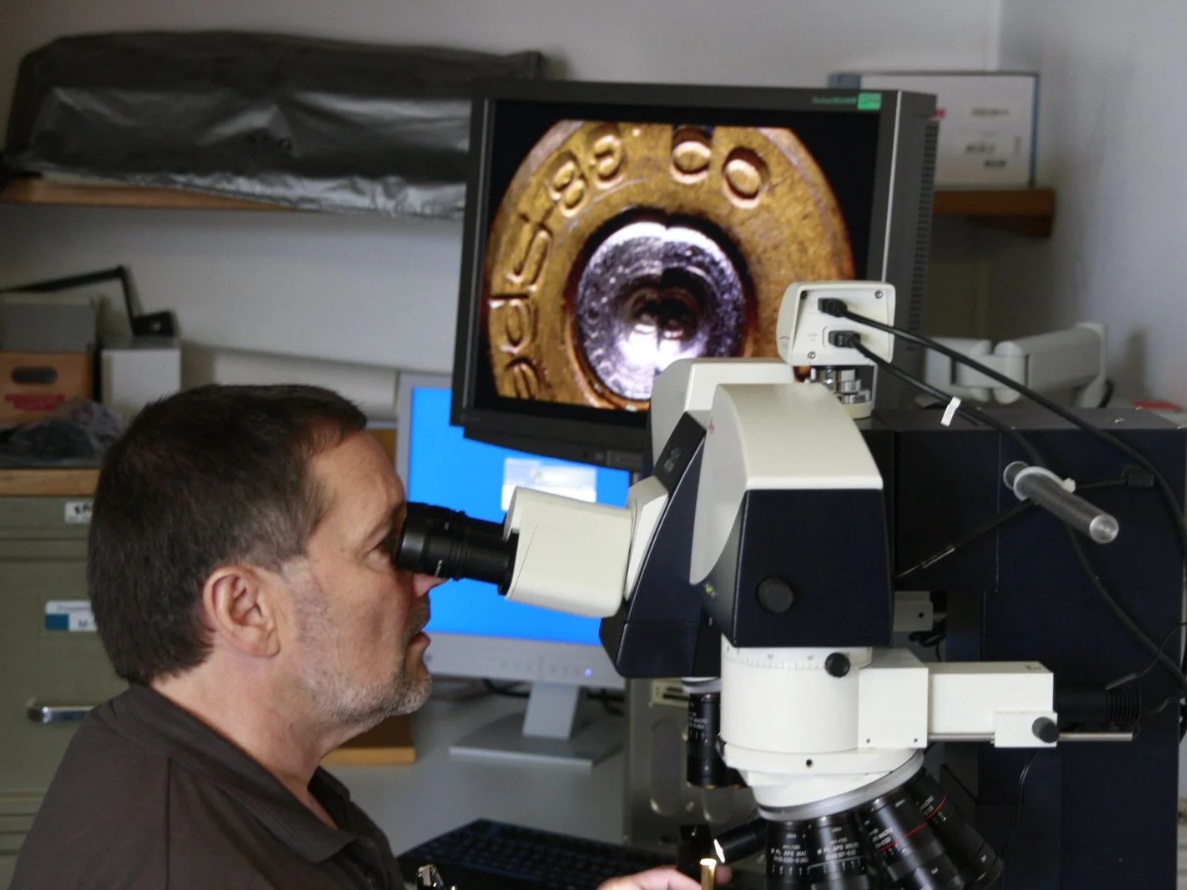
In modern crime investigation, physical evidence becomes the basis for court-admissible statements. When ballistic samples and microscopic evidence are presented in court by law enforcement agencies, there should be no mistakes. Definite matching requires a high-class forensic comparison microscope that has excellent optical accuracy, mechanical correctness, and perfect lighting conditions. From bullet comparison microscope to modern digital imaging systems, forensic optics becomes the key to successful examination.
There are several challenging conditions during work with evidence in modern forensic laboratories:
- Illumination Mismatching: Shadows and other artifacts generated by light source differences might result in false negatives when comparing striations.
- Complexity of Trace Evidence: There is a need in the capability of differentiation between structural variations in fibers, paint chips, glass shards, and hair strands.
- Requirements for Documentation: Nowadays, it is mandatory to create a digital trail of images, calibrated side-by-side overlays, and verification measurements.
As a leading manufacturer and distributor of optical devices with more than 25-year experience on the market, OPTOEDU develops high-quality forensics comparison scope solutions, including advanced forensic comparison microscope systems.
The Role of Optical Bridges in Crime Scene Investigation
An optical bridge connects two different optical trains into one binocular or digital viewing area so that examination can take place of two specimens at the same time but under identical optical conditions. Such technology forms an integral part of the professional comparison microscope, especially for ballistics and microscopic evidence analysis.
Achieving Equal Illumination and Color Temperature Across Dual Optical Paths
The dual-path simultaneous observation necessitates an absolute parity of the left and right optical paths to avoid visual fatigue and artificial contrast differences.
- Color Parity in Dual Path: Having two cold LED or halogen lamps provides color parity in both light paths, preventing false coloring during side-by-side forensic microscopy.
- Split Line Adjustment: The use of a precision-machined optical bridge facilitates the movement of the split line freely over the unified field of view, which is the basic feature of a split-screen comparison microscope.
- Illumination Adjustment: Coaxial, oblique, and polarized illumination provide a solution to the problem of specular glare on curved metallic surfaces during trace evidence comparison microscope testing.
Striation Matching: Comparing Fired Bullets, Cartridge Cases, and Tool Marks
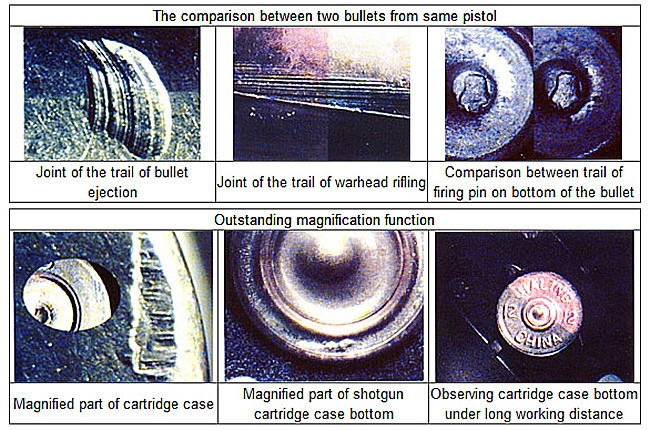
The microscopic scratches created by the gun barrel or cutting tool create a unique mechanical mark that works as a fingerprint in ballistic and toolmark analyses.
- Bullet Striation Comparison: With the help of a comparison microscope for ballistics, which is otherwise referred to as a ballistics comparison microscope, it becomes possible to match microscopic striations on the lands and grooves of the projectiles. The use of a special bullet comparison microscope facilitates the identification of matching surface features through split-field analysis.
- Breech Face Analysis: Working as a cartridge case comparison microscope, the double-optical system helps in matching firing pin impressions and primer shear marks.
- Toolmark Comparison: Working as a firearm toolmark comparison microscope, the two-stage system helps in matching shear marks of cut wire, lock shackles, and other forced entry points.
Digital Forensic Integration: High-Resolution Image Capture and Overlay Analysis
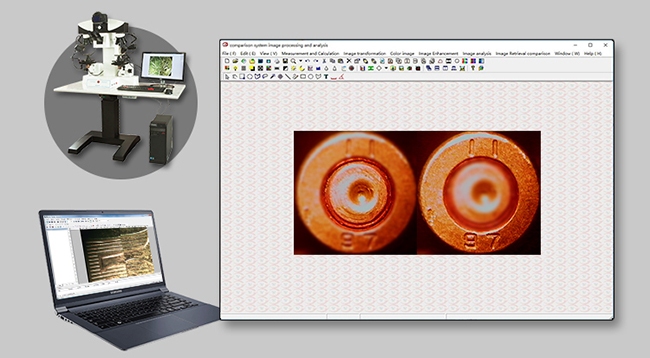
The integration of sensors and comparison software converts regular optical examination into an automated process of analyzing quantitative evidence. A contemporary digital forensic comparison microscope merges regular optical examination with computerized imaging and measurement.
Advanced Imaging Algorithms and Split-Screen Overlay
Digital imaging makes up for the shortcomings in direct eyepiece visualization and forensic database comparison via computers.
- Split-Screen Line Control: The split-screen comparison microscope can be run using professional software, making it possible to control the position of the separation line and the thickness of the line.
- Digital Image Overlap: With the digital forensic comparison microscope, it is possible to control the transparency level of the images to be able to overlap the questioned sample over the standard sample.
- Full Spectrum Traces: As a versatile trace comparison microscope, full-spectrum light (UV and Polarized Light) makes fiber comparison microscope and hair comparison microscope applications visible because of fluorescence.
Ensuring Court-Admissible Documentation and Evidence Integrity
Chain of custody, measurement accuracy, and reproducibility are some of the necessary characteristics that digital forensic evidence should meet in order to be brought into court.
- Paint Chips Examination: Paint chip comparison microscopy takes pictures showing cross-section layers such as primer, color coat, and clear coat using micrometer depth measurement.
- Glass Refraction Examination: Glass fragment comparison microscopy identifies stress fractures and refractive index boundaries in questioned and known glass samples.
- Inviolable Audit Logging: Forensic software takes raw image captures and user comments into an audit log to ensure the integrity of evidence.
OPTOEDU Forensic Solutions: Empowering Law Enforcement and Security Agencies
OPTOEDU is a manufacturer of sophisticated forensic comparison microscopes that meet the needs of the contemporary criminal lab, defense facility, and security print bureau. The products are applicable to ballistic identifications, tool marks on firearms, and trace evidence comparisons.
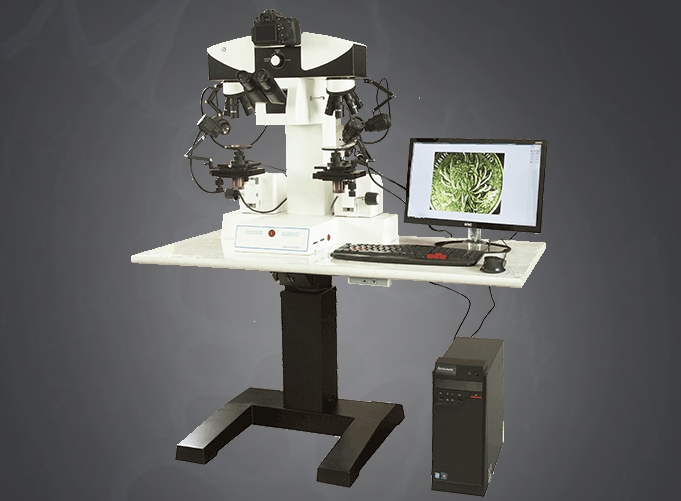
Tailored Hardware Configurations and Motorized Automation
OPTOEDU provides a complete range that includes the flexible step-zoom system as well as a fully motorized touch-screen forensic comparison microscope system.
- Motorized Precision: With a motorized forensic comparison microscope such as OPTOEDU A18.1830, XYZ stage and nosepiece operations become automated, resulting in increased efficiency when dealing with large quantities of evidence.
- Wide Magnification Range: Offering an optical zoom magnification range from 2x up to 240x (extendable up to 288x), allowing for a smooth transition from macro evidence placement to micro-striations viewing.
- Flexible Stage Systems: Combining joint-moving motorized stages with universal bullet holders enables the processing of heavy physical evidence, currency, documents, and ballistics.
Comprehensive Service, Global Compliance, and 3-Year Warranty
OPTOEDU assists forensic procurement officers with factory pricing, customization of hardware, and technical support.
- Factory Pricing Advantage: Factory pricing helps in ensuring that the equipment budget of crime laboratories is utilized to the full potential without sacrificing on optical excellence.
- 3-Year Quality Warranty: OPTOEDU forensic comparison systems come with a complete 3-year quality warranty to provide long-term security to the government.
- Customization and Technical Support: Customization of software modules and multilingual documentation, along with technical support, makes installation and technician training easy.
Elevate Your Forensic Capabilities
Optimize your crime lab’s visual accuracy with court acceptance. If you need an advanced comparison microscope for ballistics analysis, a forensic comparison microscope, or a trace evidence comparison microscope in your lab, we at OPTOEDU provide you with professional optical solutions for forensic purposes. Get in touch with the OPTOEDU forensic optics department at sale@optoedu.com for technical specifications and quotes on our range of A18 forensic comparison microscopes.
FAQ
Q: In what ways does an optical bridge microscope differ from a normal stereo microscope?
A: The optical bridge microscope is a combination of two independent optical paths of microscopes into one viewing field, enabling the simultaneous side-by-side view of two specimens at the same magnification and under the same illumination conditions.
Q: Why is it important for the illumination color temperature to be matched in ballistics and trace evidence analysis?
A: The mismatch of illumination color temperatures results in false contrasts and color distortions of the left and right specimens, leading to possible obscuring of fine striation lines and false evidence matching.
Q: Is it possible to use comparison microscopes to compare non-ballistic trace evidence such as fibers, hair, and glass?
A: Yes, it is possible by adding polarized light, coaxial illumination, and UV light to a forensic comparison microscope, which would enable the examination of various properties of the trace samples.
Q: What is necessary for the images obtained with a digital comparison microscope to be court-admissible?
A: Uncompressed raw images, calibrated spatial scales, records of illumination parameters, and audit logs demonstrating chain-of-custody integrity are needed.